
Have you ever wondered: Why do some children seem more ready to focus after they jump, climb, or push something heavy? Or why does a short movement break sometimes help a child in settling into learning more easily?
For children with cognitive and development differences, these moments are not random. These are part of a sensory diet. When you hear the word “Sensory Diet” it might sound a bit technical, but it’s a gentle way of integrating sensory experiences throughout the day so that the body and brain stay organized, comfortable, and ready to take part in everyday activities.
Like a regular meal strengthens the body, sensory activities help in strengthening the nervous systems. Sensory activities can support attention, involvement, and emotional balance when thoughtfully integrated into everyday life at home or at school.
To understand what this looks like in real life, let’s walk through a typical day where sensory support is naturally built into everyday activities.
Morning: Preparing the Body for the Day
The morning sets the tone for the entire day. Instead of rushing straight into getting ready, a few playful movement activities can help the body wake up.
You can tell your child:
Let’s try a few fun body moves!”
- “Can you stretch your arms up high… like you’re reaching for the sky?”
- “Now let’s try a wall push, show me your strong muscles!”
- “Can you help carry this small backpack or move the laundry basket?”
These activities will be fun and would provide proprioceptive input, which involves muscles and joints. These inputs help children feel grounded, aware of their bodies, and ready for the transition into the day.
Did you know? Even breakfast can offer sensory experiences. Crunchy foods, sipping through a straw, or warm foods can provide gentle oral sensory input that helps prepare the body for the morning routine.
By the time the child leaves for school, their body feels awake and organized.
Mid-Morning: Supporting Focus and Learning
During learning time, the body often enjoys small sensory breaks too. Many children learn best when a little movement becomes part of the routine.
You might pause for a quick activity and say, “Let’s take a tiny movement break!”
Short breaks can be simple and playful, such as:
- Animal walks across the room: “Can you walk like a bear or hop like a frog?”
- Jumping in place a few times: “Let’s do five big jumps!”
- Rolling a ball back and forth together
These little movement breaks help the brain stay attentive and engaging. When the body moves, sensory systems become active and support the child in processing and absorbing new information.
How This Helps in School: Sensory support can be very helpful in classroom environments. When children have opportunities to move or engage their bodies, they often feel more prepared to participate in learning activities.
Teachers may sometimes include strategies such as:
- Short movement breaks between lessons
- Classroom jobs like carrying books or passing materials
- Using flexible seating options
- Allowing brief stretching moments
These small adjustments can make the learning environment more comfortable for children who benefit from sensory input.
Instead of interrupting learning, sensory activities often prepare the brain for learning.
Afternoon: Movement and Exploration
Afternoons are a great time for bringing in activities which involve bigger body movements. Children naturally enjoy moving more after a morning of learning and structured tasks.
You can invite your child by saying, “Let’s go outside and play for a bit!”
Children enjoy activities such as:
- Swinging at the playground
- Climbing on play structures
- Riding a bicycle or scooter
- Playing catch or simple running games
These movements help in stimulating the vestibular system, which supports the brain in understanding balance, movement, and body position.
Outdoor play also brings many natural sensory experiences like feeling the breeze, running on grass, or exploring different textures along the way. These simple moments help in building coordination, body awareness, and confidence.
Play becomes both joyful and supportive for the sensory system
Evening: Gentle Engagement
As evening approaches, the energy often begins to slow down. This is the ideal time for introducing activities which feel calmer and comforting while providing the body with gentle sensory input.
You might simply ask your child, “Do you want to do something quiet for a little while?”
Some children enjoy activities like:
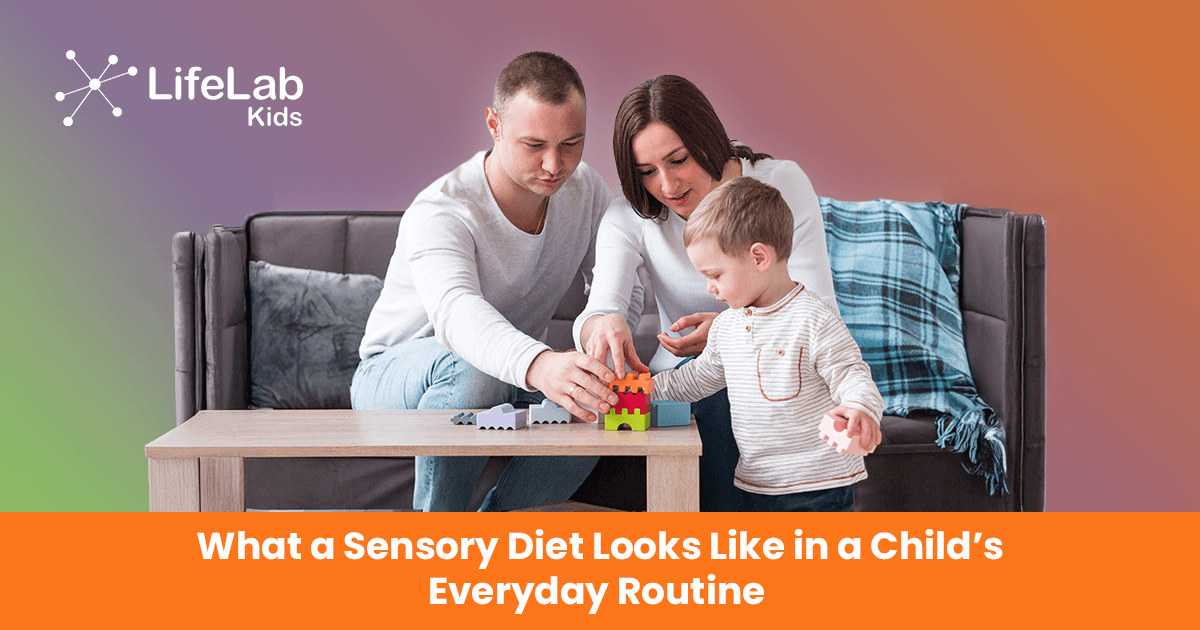
- Building towers or small creations with blocks
- Drawing or coloring their favorite things
- Squishing and shaping clay or putty
- Listening to music while playing quietly
These activities keep their hands busy and the mind engaged, while helping the body settle into a more relaxed rhythm.
Even simple household moments can turn into helpful sensory experiences. A child might enjoy helping carry a few groceries, setting up the table, or pushing chairs neatly back into place.
These small movements gently involve the muscles and help the body feel organized and calm as the evening continues.
Little by little, the day winds down and so does the sensory system.
Bedtime: A Calm Ending to the Day
As bedtime gets closer, gentle and comforting sensory moments help the body to slow down and prepare for rest.
Sometimes a simple line like this works well: “Let’s start our cozy bedtime routine.”
Simple activities can include:
- A warm bath to relax the body
- A few gentle stretches before getting into bed
- Reading a favorite story together under a blanket
These comforting experiences give the body signals that the day is coming to a close. Deep pressure, warmth, and familiar routines help children feel calm and secure.
When these moments become a routine and occur every day, the body starts to recognize the pattern. Overtime, this familiar rhythm gently guides the body into a peaceful and restful state.
A Sensory Diet Is About Daily Balance
A sensory diet does not have to be complicated; it should naturally blend into everyday routines.
Movement, touch, exploration, and calming activities can all support a child’s ability to participate in learning, play, and family life.
Every child responds differently, and observing what brings comfort, engagement, or focus can provide helpful clues.
Over time, these small moments of sensory support can make daily routines feel smoother and more enjoyable, for children and for the adults who care for them.
At LifeLab Kids, our therapists often work with families to understand each child’s sensory needs and create supportive experiences through play, movement, and everyday activities. With the right guidance, sensory routines can become a natural part of a child’s day at home, in school, and in the community.